Showing posts with label youth. Show all posts

Sunday, November 27, 2011

Olinga Jimmy

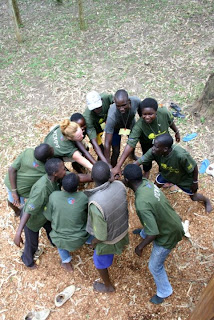
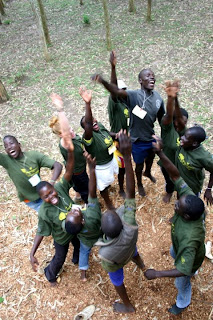
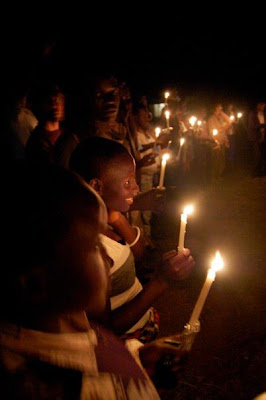
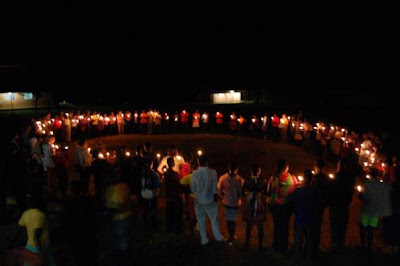
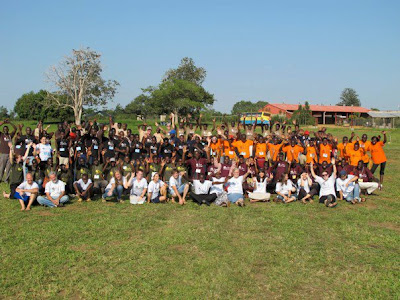
'Peace Camp Day' was held on Friday, Nov. 25th to mark peace camper, Olinga Jimmy's, completion of training his ENTIRE parish in peace building skills. Jimmy set out on his task on alone and reached every village within Kula Kula parish (which is a lot). He probably sensitized close to a thousand community members on forgiveness, reconciliation, and positive communication.


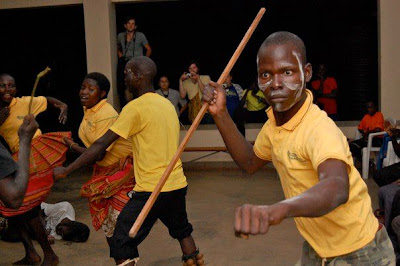
Upon finishing his trainings he called a meeting with me and Ugandan Peace Camp counselor, Okello Walter. He said that he wanted to have a bigcelebration. We started talking about possible ways of getting organized before he interjected and told us that he had already organized the whole thing, he was just inviting us to attend.The event featured 5 community groups (4 groups of adults, one youth group) who all preformed music, dance and drama. Some topics addressed in the drama were domestic violence, alcoholism, life in the IDP camps, abductions, and justice.


Jimmy is 19 years old. He was abducted and lived in the bush for 4 years. He has never been able to go back to school and speaks very patchy English. He has been living in the village as a farmer since returning from the bush. It seems that Peace Camp unlocked a hidden potential in Jimmy. Even throughout the week of Camp he was continuously asking me how we were going to bring all of the knowledge of peace building back to Ngai. It turns out that he didn't need my help or advice at all- about 300 people attended the event :)


In addition to working in his own home area Jimmy also managed to motivate one of the shyer campers, Obang David. As a result David has also started training his parish. He has tentatively scheduled a 'Peace Camp Day' in Acut Parish for Dec. 20.


Jimmy is kind of a local celebrity in Ngai at the moment. In addition to creating an organic and sustainable dialogue about peace building in the community I think that Peace Camp and Jimmy's post camp activities will probably change the course of his life here in Ngai completely.

I feel like this has become my Peace Corps mantra but I'm incredibly proud of him.


Saturday, October 8, 2011

Ronald

Some of my fellow volunteers are putting together a week long leadership development training for teenage boys called Camp BUILD- Boys of Uganda In Leadership Development. I was able to recruit kids from my area for the program, this is one of the applications I got back.

Name: Ojok Ronald
School: Ngai Secondary School
Class: S2 (Sophomore)
Date of Birth: 1996

Camp BUILD Uganda United States Peace Corps Essay Questions


Name one change you would like to make in your life.

I would like to change my life to a better one by advising people in my areas to cooperate between themselves.


Why?

Just to create friendship between the people in the community.


Name one change you would like to make in your community.

I would encourage the people in the community to study hard to make the community see how good education is so that some people that had not yet studied see from them.


Why?

To help the community to become better medical personnel ie. doctors and even teachers as a result of education.


Name one change you would like to make in Uganda.

One change that I would like to make in Uganda is that I will advise the President of Uganda to reduce the cost of commodities eg. sugar, soap.


Why?

Just to make the cost of commodities easy so that orphans can also afford them.


If you had a ten year-old brother, what advise would you offer on how to become a respected leader of his community in Uganda?

I would advise him to work hard so that in future he becomes a respected leader and even advising him to be smart, that is to say he should bath and wash his clothes and he should be exemplary to the citizens. He should also help the community with social services.


What are three goals you have for your future?
  1. I would like to study and become a musician.
  2. I would like to be a teacher.
  3. I would like to be a Member of Parliament.


How do you think Camp BUILD will help you to reach your goals?

I think Camp BUILD will encourage me to be exemplary to others.
I think Camp BUILD will help me to be well known for the high standard that I have studied.
I think Camp BUILD will motivate me.
I think Camp BUILD will help me to achieve.
I think Camp BUILD will bring cooperation.
I think Camp BUILD will help me to pay some taxes.


Naturally I choose Ronald as one of the kids who will be attending BUILD. So off the mark but so cute. He’s incredibly sweet, extremely excited, and will get a lot out of the experience. That being said, his application has cracked me up every time I’ve looked at it.

Monday, September 19, 2011

Youth Newsletter

A few PCVs and I are attempting to start a Uganda wide youth newsletter. This is the article that I wrote for our Peace Corps newsletter announcing the project and trying to convince people to get involved:


As Peace Corps Volunteers we are in a unique position to build relationships with the people who are responsible for the future of Uganda. No, I’m not referring to our government officials, development workers, or local leaders- I’m talking about Uganda’s youth. Let’s face it, whether you’re a teacher, health worker, or business consultant we are all kid magnets! We work and interact with youth in a variety of ways and PCVs describe their life skills clubs, games and sports programs, involvement in Peace Corps camps, or just hanging out on their verandahs with the neighborhood kids as being some of the most rewarding experiences of their service. Through our varied interactions with youth we are not only able to recognize the need for guidance and positive influences in kids lives but also the benefits that can come from listening to them and creating opportunities for them to become leaders. Inspired by the amazing kids in our lives and communities here in Uganda a small group of volunteers have joined together with the GAD (Gender and Development) committee to lay the groundwork for Peace Corps Uganda’s very own National Youth Newsletter.

The Newsletter will be for youth, by youth. It is designed to be an open forum where kids can express their ideas, opinions, and experiences regarding gender and youth related issues by writing and submitting essays that will be used as articles in the publication. By engaging with these issues through the Newsletter youth have the opportunity to think critically and independently, are given the space to develop their own unique perspectives, become leaders and role models to kids in their communities and around the country, are exposed to different viewpoints, and have access to positive reading materials. We are envisioning having one publication between 2 and 4 pages in length once every two months but will respond to the needs and wants of both the youth and PCVs participants.

How will is work? The Newsletter committee will announce the theme of the upcoming issue and related essay questions to PVCs. PCVs can distribute the essay questions to youth in their areas. Volunteers will collect essays and submit their top writing samples. A panel of judges will then select the best essays to be handed back to the committee who will create the actual Newsletter from those selections. The Newsletter will be emailed to PCVs who can then distribute copies in their schools and communities.

As you can see there will be a lot of opportunities for volunteers to get involved and help guide the project. We’d like to have PCVs judge the essays and select which submissions make it in to the Newsletter. PCVs should also feel free to suggest themes for the issues, essay questions, or anything that they feel would help make the Newsletter more dynamic. As the project progresses there will also be opportunities to add new aspects such as creating life skills activities that compliment the ideas addressed in the Newsletter. The opportunities are endless and together with your help we hope to explore them all!

Our goal is that PCVs will utilize the Newsletter not only to help foster difficult conversations but also to highlight projects and youth who make you happy that you decided to live in a mud hut for two years. We know that you have a lot to be proud of and we want to help you brag. With the theme of each issue you will receive essay questions but we also encourage PCVs to make the project work for you. Feel free to interview youth who are less skilled in writing, create your own essay questions that relate back to the theme, or ask a student to write about a successful project that you recently completed together. We’re happy to be flexible if you keep us informed about your great ideas. The bottom line is that we think that we have an opportunity to do something really cool but it’s not going to work unless you and your kids’ thoughts and ideas are represented!

Monday, August 29, 2011

Post Peace Camp Peace

This is an email that I sent to everyone who worked at Peace Camp detailing our rather challenging and hysterical ride back to Oyam and the impact that the kids are already making in the community.

Hello Peace People,

I hope everyone is
recovering well after our exhausting and amazing week in Gulu. While I know that I'm going to be seeing the majority of you tomorrow I wanted to share some of my post Peace Camp Peace Camper experiences with you.

Our ride back to Oyam from Gulu required a fair amount of teamwork from everyone to keep ourselves in our tiny open backed truck. We were all piled on top of one another but no one complained and everyone looked out for one another. The kids sang songs and deci
ded that rather than chanting the names of their counselor groups, which were obviously all different, they should find a more unifying title. They started yelling that they were The Peacemakers with pride. It was only a matter of time before we were pulled over by the police. He was obviously looking for a bribe and as Walter, one of our Ugandan co counselors, got out of the truck to try to negotiate all of the kids started calling to the officer, ‘We are the peacemakers!!! If you don’t let us go who will help you keep the peace!!!’ It was pretty hysterical, I was proud. (Yes, we did still have to pay the bribe but at least they tried.)


I when we reached I invited anyone who wanted to meet up to come to Ngai Sub-County this afternoon (Monday). Eight campers came and lot of these kids live REALLY far from here. Some of them probably walked about 2 hours each way to be able to meet up.


We started with some small activities and played a few games but it was clear that they were looking for something of more substance. We had a discussion about the importance of trust in the peace building process and then we did trust falls. I explained that they could teach people in their school or communities about trust using the same methods. Naturally they all said that they would have absolutely no problems with teaching this new trust lesson on their own and didn’t want to practice. I decided to put them to the test.

I managed to round up about 15 local kid to be the first students of our students. At first our kids were a little shy but after a few minutes they worked it out and jumped right into their roles as community peer peace educators. Each one of them played a part in the lesson. Some talked about the importance of trust, some demonstrated the trust fall for the group, others helped teach the safety tactics and gave encouragement to the kids. After successfully getting every single one of their participants to do the trust fall they gathered the group into a circle and lead a reflection. They then taught the kids a few of the games that they learned at camp. When they finally announced that their lesson was over the local kids protested saying that they were having too much fun and wanted our kids to teach them something else.

I can’t express how proud I was of all of them today. I didn’t even start the meeting off with the intention of having them teach a lesson so they literally had no idea that it was coming. They stepped up to the challenge and at the end all of the local kids had a lot of fun and said that they learned something new. Their lesson was relatively seamless as they communicated with one another calmly and allowing everyone to take the lead on at least one piece of things. Three of our out of school youth, Jimmy, David, and Leo, who were all a bit more reserved during camp, stepped up and lead some of the more challenging reflective parts of the presentation. It was awesome.

I recognize that this email is a little bit fluffy and rambly but I know how much time, work, and heart you all put into helping to empower the campers this past week. I wanted to let you know that it worked.

Eliza

Saturday, August 27, 2011

Peace Camp

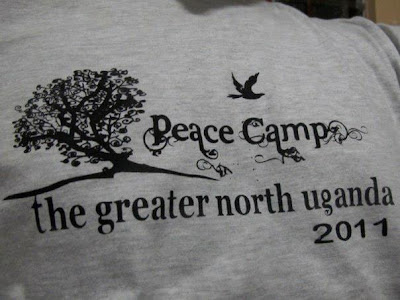
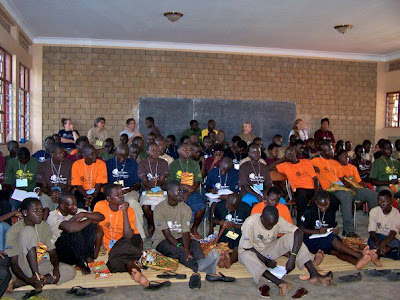
For one week 80 youth from 4 different tribes of Northern Uganda joined us for our first ever Peace Camp. The youth were both boys and girls ranging from 15-19 and had all been heavily affected by the conflict with the Lord’s Resistance Army. Some of the kids had been abducted and forced to fight with the rebels, others spent their childhoods in IDP camps, many saw their parents, siblings, and friends murdered and some were even forced to assist with the killings, many of the girls had been raped and some had children. All grew up in harsh conditions where it was unclear whether or not they’d survive until the next day.

Peace Camp was designed to allow the youth to address some of the lingering issues and trauma resulting from their experiences during the war. The hope was that they would be able to release some of the burdens they had been carrying and start the process of bringing peace to themselves, their families, and their communities. The main topics addressed during camp were forgiveness, reconciliation, positive communication, trust, peaceful living, and looking towards the future.

I was lucky enough to have been selected to be a counselor for the camp which meant that my Ugandan co-counselor and I was responsible for bringing 10 campers through the days activities and helping them process all of the new information they were getting as well as their feelings.

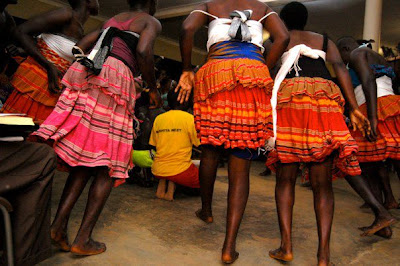
They training was extremely dynamic with interactive lessons prepared by PCVs, experts brought in to address certain topics, a man who had also been abducted who now runs an extremely successful company, an opportunity to showcase their traditional tribal dances to the kids from other regions, and even a trip to a phenomenal ropes course to put lessons on teamwork, communication, and self-esteem into action.


It’s difficult for me to write about Peace Camp because it was such an amazing experience both for me and my campers. It feels too big to put into words. What I can tell you is that I saw kids who’s lives had been dark smile, laugh, and play. I saw kids mourn the loss of parents who one day just disappeared. I saw friendships made between children of different tribes that had historically blamed one another for the violence. I saw kids whose bright futures had been stolen from them see that the world can still hold opportunities for them if they are willing to take control of their lives again. I feel so lucky to have been a part of this experience.


Friday, July 1, 2011

Peace Day

Violence is an unfortunately present aspect of life in Northern Uganda. Domestic abuse is endemic throughout the country and what we would consider to be child abuse is thought of as discipline or sometimes even a form of love. Additionally, Northern Uganda suffered from a 25 year war. The LRA focused most of their brutal attacks on civilians and refreshed their ranks by abducting children, forcing them to serve as soldiers, porters, or ‘wives.’ My entire community was forced to live in Internally Displaced Persons Camps (like refugee camps but within your own country) for years so that the army could ‘protect’ them. The army officers who were sent to fight the LRA and guard the people were often no better than the rebels. They would beat civilians, rape women, and accept sexual favors from young girls, often sent against their will by their families, in exchange for food. Life in the IDP camps also resulted in an escalated rate of HIV, alcoholism, horrible water and sanitation conditions, the break-down of local cultures and traditions, lack of education opportunities for school age children, and a population explosion. Baring all of this in mind it’s not shocking that people have become desensitized to violence.

After returning home from a training in Kampala a few months ago I was met with the news that three violent murders had taken place in Ngai within the previous month. First, an army officer who was originally from this area was invited back to facilitate a training for the local police. While here, he heard rumors that his sister, who was still living in Ngai, was romantically involved with an unsavory local youth. Unhappy about the situation he confronted the young man. A fight ensued and the army officer was beaten to death in the road.

Second, a local man went back to his house late in the evening. He had been drinking heavily and ran out of money. Apparently his drinking habit had been a major drain on the family income. When he attempted to take all of the food that remained in the house, all of the food that they had to feed themselves and their many children, his wife hit her breaking point. She protested, they argued, things got physical and she, 9 months pregnant at the time, managed to overpower him and hit her husband over the head with a large rock, killing him instantly.

The last and most shocking incident involved primary school children. Apparently two girls, one in 3rd grade and the other in 5th, had been harassing a 4th grade boy for sometime. They had been forcefully trying to convince him to have sex with them but he repeatedly refused. One day the harassment escalated. The girls managed to lock the boy in a hut with them. Enraged by his refusal they beat the boy to death. The medical officer who examined his body said that the damage was extensive and brutal with several broken bones and a mutilated groin area.

As I mentioned earlier, violence is fairly commonplace in Northern Uganda and the first two incidents didn’t cause much of a stir. The case of the primary school students was different. People were upset about what happened and shocked that such a crime could be committed not only by kids but by girls. My coworker, Tonny, and I decided to pay a visit to Onek Gwok, the school that the students had attended, to see what kind of activities and counseling were taking place to allow the other students to grieve the loose of their classmate and process the horrible attack that lead to his death.

“Nothing!,” the head teacher told us. “No one has come to help us deal with this situation but the students must be scared and confused. We would really like to address this with them.” We got to work planning a school meeting. We invited all of the local religious, political, and cultural leader to the event to show support to the students and demonstrate that the death of a pupil would not be taken lightly. We also invited the chief of police who explained exactly what happened so that the students would understand that they themselves were not at risk and that it was an isolated incident. Lastly, the head teacher spoke to the children. While it’s hard to accept, the fact is that this murder was committed by students. The head teacher asked them to think about their own behavior. He encouraged the students to think of one another as brother and sister and leave violence and bullying behind. It was a challenging day but overall successful and the school management committee even decided to schedule a second meeting to speak with the parents of their pupils.

A few weeks later I met with the head teacher again. He was very pleased with the way that our meetings had turned out and was seeing a positive impact in the school culture. “How would you feel about hosting an community event about peace building here at Onek Gwok?” I asked. I had been secretly hoping that things would move in this direction all along. While the murder was horrible it was also the only thing that had gotten the community to think critically about the culture of violence that resulted from the war. It had created an opportunity for people to think about the kind of community that they wanted to live in and make more calculated changes to address that. “I think it’s a great idea!” The head teacher exclaimed. Plans for the first ‘Peace Day Celebration’ were put in place.

I arrived at Onek Gwok early on the morning of June 30- Peace Day. I was met at the school grounds by hundreds of excited children. Music, Dance, and Drama aka MDD seems to be Africa’s favorite was of addressing social issues and Peace Day was no different. Throughout the weeks leading up to Peace Day, teachers at the school had been busy composing songs and plays that addressed issues such as gender based violence, land disputes, and positive communication for the student to perform. During the planning process we also discussed the breakdown of local culture and thus the management committee decided that the students would perform the traditional Lango dance Abuda. I had been at the school all of 10 minutes before I started tearing up at seeing that the dancers had taken it upon themselves to make the beautiful headdresses that are traditionally worn for Abuda.

After admiring every headdress and praising the owners I started looking around for the school staff. They were nowhere to be seen, there were about 400 students at the school and as far as I could see, I was the only adult around. Not even the head teacher with whom I had worked so closely to put the event together was there. Just as I was starting to get annoyed and upset he arrived. “Bad news,” he said. “One of our teachers has died and is to be buried today. It’s customary for the entire staff and all of the pupils to attend the funeral.” Shocked and feeling guilty for my earlier impatience I didn’t know what to say. “I’ve spoken with the family and asked them to postpone the burial but they’ve already made the announcements on the radio and their hands are tied. All of the teachers will be attending the funeral but our music teacher and I will stay behind for Peace Day. It’s unfortunate timing but we can’t turn back now!”

Here’s a piece of advice for anyone who is thinking about planning community events in rural Africa- don’t schedule them to start in the morning! Our agenda had us beginning at 10am at the head teacher’s request (we had a lot to cover). As you’ve seen, my morning had already been a bit of a rollercoaster of emotions and by one o’clock in the afternoon I was ready to throw in the towel and sadly accept defeat for the event that felt so close to my heart. “Wait, they’ll come,” the head teacher kept telling me. “They went to their fields to work in the morning, went home to bathe, now their cooking and eating lunch, they’ll be here around 2.” Sure enough about 200 villagers arrived at 2. Why we didn’t just plan to start at 2 is a mystery to me but I have most definitely learned my lesson.

Peace Day was phenomenal. In addition to the student’s beautiful songs and dances we also had a drama performed by the Women’s Guild from the local Catholic Church. The local leaders spoke about the importance of having peace in the community and looking towards the future. NGO workers praised the community for taking the initiative to put together such an amazing and important event. Local leaders spoke of times before the rebels infiltrated the area and enchanted the kids with traditional Lango instruments, the likes of which they had never seen. One of the elders insisted on performing a ‘traditional American dance’ in my honor. The number was entitled ‘I’m a tricky tricky tricky tricky cowboy’ which also happened to be all of the lyrics. I returned the favor by joining in at the end of the students amazing performance of Abuda.

Unfortunately a lightning storm blew in and the head teacher quickly dispersed the crowd. Lightning has taken the lives of about 20 people throughout the country over the past few weeks. The local leaders, school representatives, and planning committee stayed for a post Peace Day reception featuring a grizzly goat stew and sodas. As preachers, government officials, and clan leaders all expressed their gratitude for the event and committed themselves to the mission of building peace in the community I was once again overwhelmed by the emotion of it all. When it was my turn to address the community leaders I told them honestly that only time will tell how the event will effect the community and we still have a lot of work to do but I feel honored to be here in Ngai, honored to be a part of this work, and hopeful that, with the help of their community leaders, the people of Ngai will be able to live in the kind of place that they want.